Wondering what a Queens listing is really telling you when it says Tudor, prewar, garden apartment, or co-op? You are not alone. In a borough with many housing types, understanding the language behind the listing can help you narrow your search, ask better questions, and focus on homes that fit your goals. This guide breaks down the most common Queens housing styles and ownership types in plain English so you can read listings with more confidence. Let’s dive in.
Why Queens Has So Many Housing Types
Queens does not have just one dominant housing form. According to the latest U.S. Census QuickFacts for Queens County, the borough has 922,998 housing units and 841,003 households, with an owner-occupied housing rate of 44.9%, a median owner-occupied value of $723,800, and median gross rent of $1,956.
That broad mix helps explain why you may see detached houses, attached homes, low-rise co-ops, apartments, and newer condo buildings all within the same borough. The same Census profile also notes an average household size of 2.72 and a foreign-born population of 47.6%, which helps explain why flexible layouts and multi-bedroom options matter to many buyers and renters in Queens.
Single-Family Homes in Queens
When you shop for houses in Queens, you will usually see three main forms: detached, semi-detached, and attached homes. Each label tells you something important about how the building sits on the lot and what daily life may feel like.
Detached Homes Explained
The Census defines a 1-unit detached home as a structure that is open on all four sides. In practical terms, that usually means the house stands on its own rather than sharing a wall with the next property.
For many buyers, detached homes suggest more privacy and more potential for yard or garage space. They can also have a more spread-out feel than apartment living, though the exact layout and lot size will still vary from property to property.
Semi-Detached Homes Explained
In everyday listing language, semi-detached usually means a home shares one wall with a neighboring property. You still get the feel of a house, but with a side wall connection rather than full separation on all four sides.
A Queens planning report on Waldheim describes a local housing mix that includes one- and two-family detached homes, one- and two-family semi-detached homes, and apartment buildings. That mix is a good reminder that Queens often blends house and apartment forms in ways that are more varied than many buyers expect.
Attached Homes and Rowhouse Living
The Census defines 1-unit attached homes as separate structures that share a wall from ground to roof. Row houses, double houses, and townhouses fall into that category.
In lifestyle terms, attached homes often mean narrower lots, shared side walls, and a more vertical layout. If you like the feel of a private house but are comfortable with shared walls and multiple levels, this style may be a strong fit.
Rowhouses and Townhouses in Queens
Rowhouses are a major part of New York housing history. The Landmarks Preservation Commission says rowhouses are the dominant housing typology in many of the city’s historic districts.
In Queens, places like Sunnyside Gardens and Jackson Heights show that rowhouse living does not always mean one long unbroken street wall. These homes can also be arranged around courts, greens, and shared open spaces, which creates a different visual rhythm and neighborhood feel.
Tudor and Storybook Homes
If you are drawn to listings with charm and period detail, two style words to watch for are Tudor Revival and Storybook. In Queens, these terms are especially useful because they appear in several notable historic housing contexts.
What Tudor Details Look Like
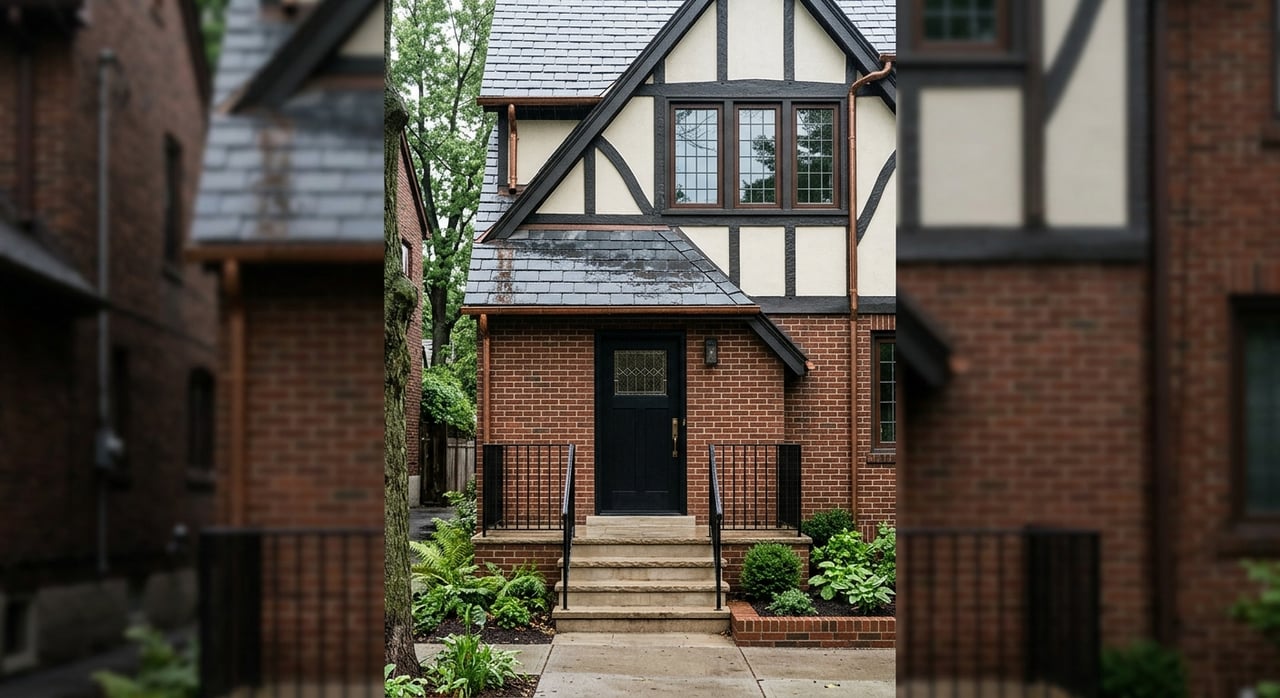
According to the Cambria Heights designation materials, Tudor and Storybook-style homes may include features such as half-timbering, diamond-pane windows, stucco, brick and stone accents, patterned slate shingles, and decorated chimneys.
If you see those details in listing photos, the style label is usually pointing to a more picturesque exterior design rather than a specific floor plan. In other words, Tudor describes the architectural look first, not necessarily the size or layout inside.
Where You May See Them
Cambria Heights is one documented Queens example where the Landmarks Preservation Commission describes cohesive groups of Tudor- and Storybook-style row houses. That makes the label especially useful when you are scanning older Queens listings and trying to separate architecture style from ownership type.
A Tudor home can still be attached or semi-detached. A co-op can still be prewar. Learning to separate style from structure is one of the most helpful steps in understanding Queens inventory.
Co-ops and Garden Apartments
For many Queens buyers, the biggest learning curve is not architecture. It is ownership structure. This is where co-ops and condos differ most.
What a Co-op Means
A co-op is not the same as a condo. The New York City Comptroller explains that a co-op owner holds shares in a corporation that owns the building, rather than owning an individual real estate unit by deed.
The city’s HPD co-op overview also explains that shareholders elect a board to make building decisions. In practical terms, co-op living often comes with a board-centered structure and common-charge or maintenance language that may feel unfamiliar if you have only looked at single-family homes.
Why Jackson Heights Matters
Queens’ co-op history is closely tied to Jackson Heights. City materials note that Queensboro introduced cooperative ownership there and converted rental units to co-ops.
Jackson Heights is also important for another reason. It was one of the early New York neighborhoods to introduce garden apartments and garden homes, with open space integrated into the site plan rather than packed tightly against the street.
What Garden Apartments Usually Mean
A garden apartment or garden home usually points to a low-rise building arranged around courtyards, greens, or shared open space. The Jackson Heights historic district materials and the Sunnyside Gardens designation report both show how this planning idea shaped Queens during the 1920s and 1930s.
If a listing says low-rise co-op or garden apartment, it often suggests a more residential scale than a tower building. That can be useful if you want apartment ownership or apartment living with a lower-rise setting.
Condos and Larger Apartment Buildings
Condos are often easier for first-time buyers to understand because the ownership structure is more direct. The NYC Comptroller defines a condo as an individual real estate unit in a multi-unit development where the owner has ownership of the specific unit.
That is different from a co-op, where you own shares in the corporation. If you are comparing the two, condos often feel simpler on paper because you are buying the apartment itself rather than a share interest tied to the building.
Walk-Up vs Elevator Buildings
Queens listings may also use the terms walk-up and elevator. The city’s tax and building-class guidance distinguishes between these building types, and in practical listing language that usually means stairs-only access versus elevator access.
This may sound like a small detail, but it can shape your daily experience more than you expect. It is one of those terms that is easy to skim past until you imagine groceries, strollers, moving day, or everyday convenience.
Where Newer Condo Supply Appears
For many buyers, newer condo inventory is often associated with larger-scale development areas such as Long Island City. City housing plans for Long Island City describe major new-home production, which helps explain why newer condo buildings are more likely to show up in that type of high-density setting.
That does not mean every condo in Queens is new, but it does give you a helpful mental map. If you are looking for newer multi-unit buildings, larger development zones are often where that search starts.
What Prewar Usually Signals
In Queens, prewar is usually about era, not one exact layout. Based on the Jackson Heights, Sunnyside Gardens, and Cambria Heights materials, the term often points to interwar construction from the 1920s and 1930s.
That can mean older detailing, established building patterns, and a more traditional neighborhood scale. It does not automatically tell you whether the property is a co-op, rowhouse, or apartment building, so it helps to treat prewar as a time-period clue rather than a complete description.
A Simple Way to Read Queens Listings
If you want to decode a listing quickly, break it into three parts:
- Structure type: detached, semi-detached, attached, rowhouse, apartment building
- Ownership type: single-family ownership, co-op, condo
- Style or era: Tudor, Storybook, garden apartment, prewar, walk-up, elevator
For example, a listing might describe a prewar low-rise co-op or a Tudor-style attached home. Once you separate those categories, the description becomes much easier to understand.
How to Match Style to Your Goals
The best housing type for you depends on how you want to live, not just what looks good in photos. Detached and semi-detached homes may appeal if you want more separation and possible outdoor space. Rowhouses may suit you if you want the feel of a private home with a more vertical layout and shared walls.
Low-rise co-ops and garden apartments may fit if you prefer apartment living in a lower-scale setting. Condos may appeal if you want unit-level ownership that is easy to understand. And if architectural detail matters to you, Tudor, Storybook, and prewar listings can help you target a certain visual character while you evaluate the ownership and layout separately.
Whether you are comparing a house, a co-op, or a condo, clear guidance can save you time and help you focus on the right fit. If you are planning a move in Queens and want tailored help understanding housing types, pricing, and next steps, Panache Real Estate offers a boutique, high-touch approach designed to make your search feel more informed and less overwhelming.
FAQs
What does detached mean in a Queens home listing?
- A detached home is a one-unit structure with open space on all four sides, based on Census definitions.
What is the difference between a Queens co-op and a Queens condo?
- In a co-op, you own shares in a corporation that owns the building, while in a condo, you own the individual unit itself.
What does prewar mean in Queens real estate?
- In Queens, prewar usually refers to homes and apartment buildings from the 1920s and 1930s rather than one specific layout.
What is a garden apartment in Queens?
- A garden apartment usually refers to a low-rise apartment building arranged around courtyards, greens, or shared open space.
What do Tudor and Storybook mean in Queens housing?
- These style terms usually describe architectural details such as half-timbering, decorative chimneys, textured masonry, and distinctive windows.
What is a walk-up building in Queens?
- A walk-up usually means a stairs-only building rather than one with elevator access.
Are rowhouses and townhouses the same in Queens listings?
- In many listings, the terms are used similarly to describe attached homes that share a wall from ground to roof, though the exact wording can vary by property and marketing style.