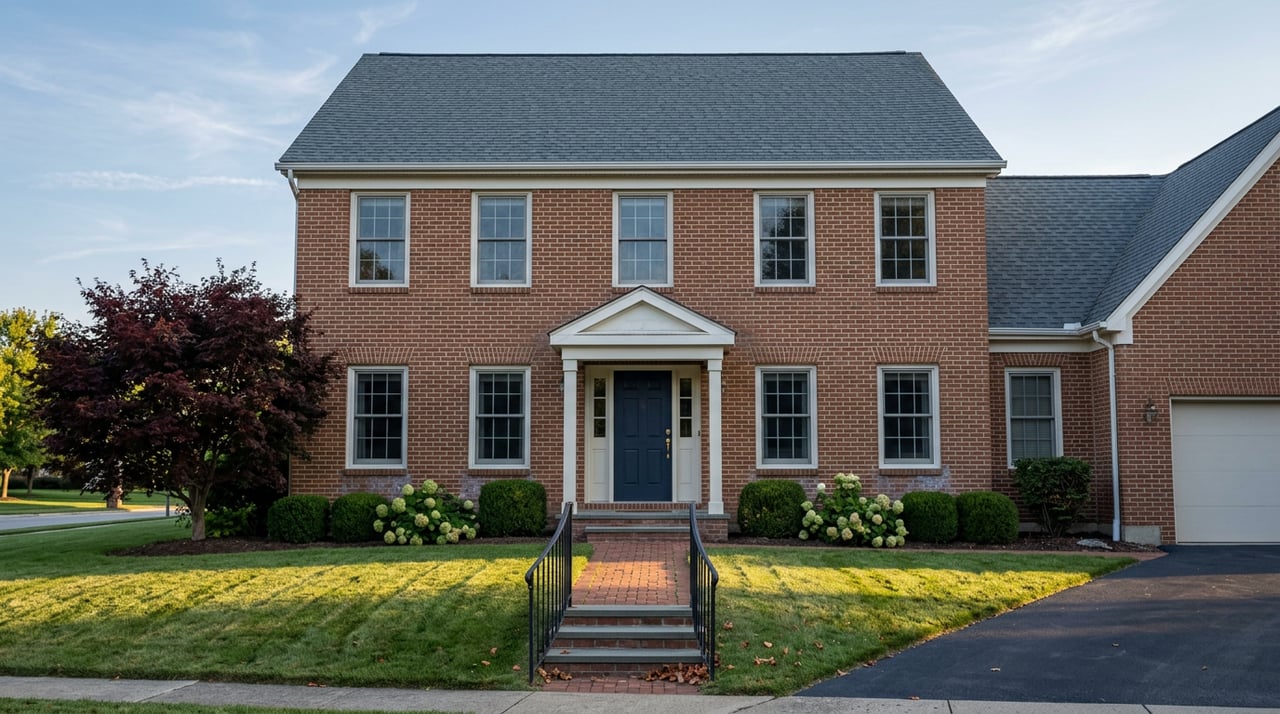
A buyer comparing a $750,000 Suffolk County colonial to an $880,000 Nassau County colonial does the obvious math: the Nassau house costs $130,000 more, so the Nassau house is $130,000 more expensive to own. Every portal listing reinforces that math with an "estimated taxes" line pulled straight from the seller's current bill.
That line is the seller's number, not the buyer's. And on Long Island, the gap between those two numbers can matter more than the sticker price difference the buyer thinks they're comparing.
Nassau County's median single-family sale price reached $880,000 in July 2026, up 2.9 percent from a year earlier, according to OneKey MLS county data. Suffolk County's median hit $750,000 in the same month, up 7.1 percent. Those figures tell a real story about where demand is running hottest. What they don't tell you is what either house will actually cost its next owner in property taxes, because the tax figure attached to a listing reflects a benefit that dies the moment the deed changes hands.
The Exemption That Doesn't Survive the Closing
Every Long Island homeowner who qualifies for the STAR program gets a reduction on the school-tax portion of their bill. School taxes typically run 60 to 75 percent of a Long Island tax bill, so STAR is the single largest lever most owners have.
Here is the part that catches buyers off guard: according to Long Island Property Tax, the seller's STAR benefit does not transfer with the house. It disappears the instant ownership changes hands. The buyer's first full property tax bill may be higher than the seller's, because it will no longer reflect any STAR exemption the seller had. The seller's credit is a separate state check, not a bill reduction. The new owner must register for their own benefit.
This means the "estimated taxes" figure on any active Long Island listing is, by definition, a number that will not apply to whoever buys the house. It's a snapshot of someone else's tax position, not a preview of your own.
The fix is simple but easy to skip: verify a property's actual, current-year tax bill with the local assessor before you make an offer, rather than trusting a monthly-payment estimate generated by a website. New York State's own tax department recommends the same thing. Once you own the home, you register separately at tax.ny.gov/star and the credit arrives as a check or direct deposit the following fall, typically in September or October.
Two Houses, Same Block, Two Different Tax Realities
The exemption-reset problem gets more interesting once you understand that STAR itself comes in two different flavors, and which flavor a given house carries has nothing to do with the house and everything to do with when its current owner enrolled.
Homeowners who have held the STAR benefit on the same property since the 2015-2016 tax year kept the older STAR exemption, which shows up as a direct deduction on the school tax bill and is frozen at that dollar amount. Everyone who bought after that point, and every new buyer going forward, can only get the STAR credit: a separate check from the state rather than a bill reduction, and one that grows by roughly 2 percent a year rather than staying flat.
That distinction means two nearly identical houses on the same Long Island street can carry different net tax positions purely based on ownership history, not property characteristics. A longtime owner sitting on a frozen 2015 exemption may show a lower net tax bill in public records than a neighbor in an identical house who bought more recently and only qualifies for the growing credit. Neither number is what a new buyer will get, because a sale wipes out whichever version the seller had and starts the new owner back at zero until they register.
The Cap That Makes the Benefit Worth Less on the Pricier Side of the Island
There's a second mechanism working underneath the first one, and it matters specifically for anyone comparing a higher-priced Nassau purchase to a lower-priced Suffolk one.
Enhanced STAR, the version available to owners 65 and older who meet income limits, applies its exemption only against the first $98,700 of a home's full value for the 2026 benefit year, according to The Reed Corporation. Above that threshold, additional home value doesn't generate additional exemption benefit. The dollar relief is capped at a fixed amount rather than scaling with the property's price.
The dollar figures make the effect concrete: savings on Long Island typically run $300 to $700 a year for Basic STAR and $600 to $1,500 a year for Enhanced STAR, depending on the district's school tax rate. That's a meaningful percentage of the tax bill on a moderately priced Suffolk home. On an $880,000 Nassau home in a high-tax district, the same fixed-dollar relief covers a much smaller share of a larger bill.
Put plainly: STAR was built to help the median homeowner, and its structure means the benefit shrinks in relative terms as the home's value climbs. That's worth knowing before assuming the tax gap between a $750,000 Suffolk house and an $880,000 Nassau house is fully offset by exemptions on either side. It usually isn't, and the direction of the gap tends to favor the lower-priced side.
Before You Compare Two Listings on Tax Alone
A few concrete steps replace guesswork with your own numbers:
- Ask the listing agent or the local assessor for the property's current assessed value separately from the tax bill, since the assessed value is what any exemption is calculated against.
- Confirm whether the current owner's STAR benefit is the older frozen exemption or the newer credit. It changes what "current taxes" actually means for that specific parcel.
- Run your own STAR eligibility once you're under contract rather than assuming the seller's figure carries over. Registration happens at tax.ny.gov/star and can be done as soon as you close.
- If you're comparing towns rather than individual houses, remember that Long Island's roughly 121 school districts, from Babylon to Southold, each set their own school tax rates, which is the other half of what determines your real bill alongside assessed value.
A Few Questions Worth Asking Before You Sign
Will I automatically get STAR the year I buy a Long Island home? No. STAR is not transferred with the property. You must register directly with New York State after closing, and your first credit typically arrives the following fall.
If I already have Enhanced STAR on my current Long Island home and I'm moving to a different Long Island town, does it come with me? No. The benefit is tied to the specific property and your residency there. You'll need to register again for the new address, and you'll only qualify for the current STAR credit structure, not any frozen exemption the previous owner may have held.
Does a higher STAR savings estimate mean a town is cheaper to own in? Not by itself. The dollar savings depends on your income tier and the district's school tax rate, and the Enhanced STAR cap on full value means that benefit doesn't grow with a more expensive home. Compare assessed values and district tax rates directly rather than relying on a single savings figure.
None of this changes whether a $750,000 Suffolk house or an $880,000 Nassau house is the better fit for a given buyer. It changes what number you should actually be comparing, and that number lives with the assessor's office and the state's STAR registration, not the listing page.
If you're weighing towns across Nassau and Suffolk and want a clear-eyed read on what a specific property will actually cost to carry, not just what its current owner happens to be paying, Panache Real Estate can walk through the assessed value, exemption status, and realistic tax picture with you before you write an offer. Request Your Free Home Valuation to start with the numbers that matter for the house you're actually buying.
This article is general information, not legal, tax or financial advice. Consult a qualified professional about your situation.