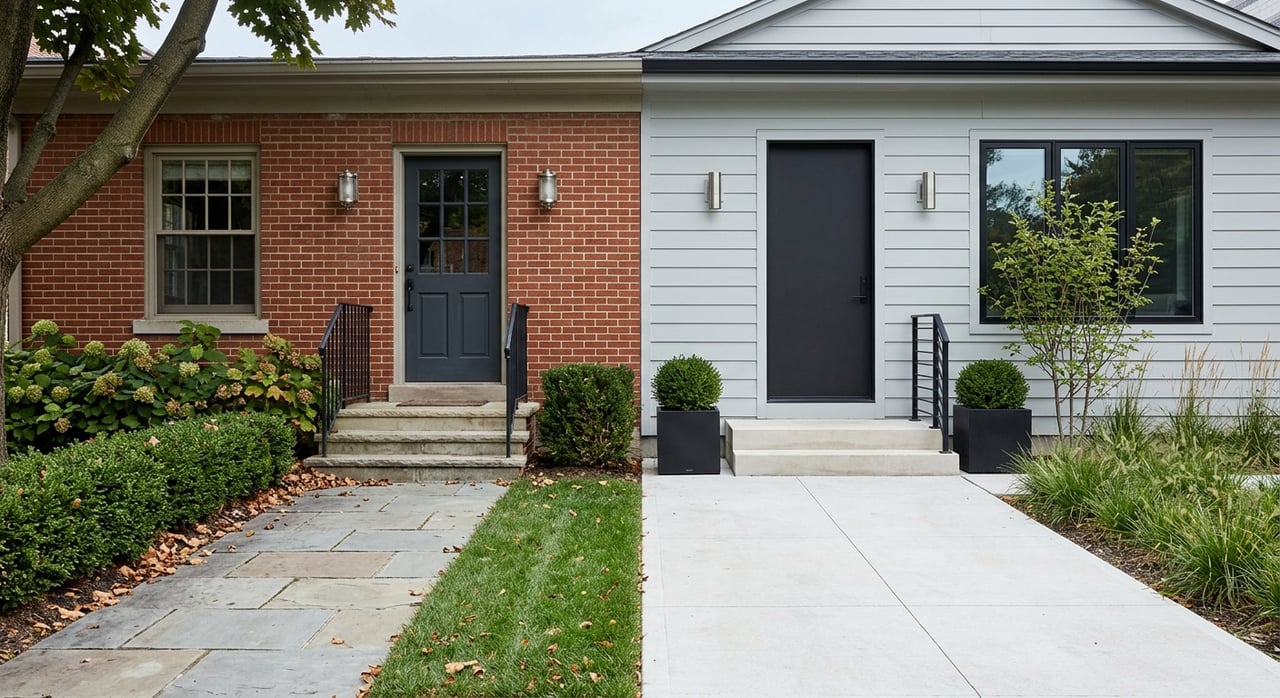
Trying to decide between a brand-new home and an older one in Suffolk County? You are not alone, and in this market, the choice is rarely as simple as “new is better” or “old is cheaper.” Suffolk offers everything from planned new communities to long-established neighborhoods with larger lots and distinct character, so the right fit depends on your budget, timeline, and priorities. Let’s dive in.
Suffolk County Is a Market of Micro-Markets
Suffolk County is a high-cost owner-occupied market, but countywide averages only tell part of the story. Census QuickFacts reports 583,777 housing units, an 82.2% owner-occupancy rate, and a median owner-occupied value of $578,400 for 2020 through 2024. Redfin reported a median sale price of $675,000 in Suffolk County in March 2026.
What matters even more is how much values vary from one town to another. Census data shows median owner-occupied values of $489,200 in Brookhaven, $535,300 in Islip, $715,600 in Huntington, $928,100 in Southampton, and $1,178,500 in East Hampton. That wide spread is why your real comparison is usually not “Suffolk County versus Suffolk County,” but one hamlet, parcel, or neighborhood setting versus another.
What New Construction Offers
New construction often appeals to buyers who want a more turn-key experience. In many cases, you are paying for modern systems, newer finishes, and a more current layout right from the start. Depending on the development, the asking price may also reflect shared amenities, private roads, or a more planned community setting.
Suffolk’s development pipeline supports that trend. County planning materials say that since 2019, 80 multifamily complexes with 7,661 units have been built, more than 3,000 units are under construction, and 82 proposed complexes could add more than 7,200 more units. That tells you a meaningful share of Suffolk’s new inventory is coming through community-based development rather than scattered custom homes.
New Construction Can Mean Different Things
Not all new homes in Suffolk look the same. Country Woods at The Colony Preserve in Shirley is one example of single-family detached new construction, with 74 homes on more than 59 landscaped acres and prices starting from $769,000. Country Pointe Meadows in Yaphank shows another format, with townhomes and villas in a planned 55-plus community in final build-out.
There is also smaller-scale custom and infill construction in western Suffolk. A Huntington project listed in a local builder’s portfolio shows that new construction is not limited to major subdivisions. In other words, “new construction” can describe a lot of different buying experiences, from a large planned development to a one-off newer home in an established area.
New Construction Pros
If you are comparing a new build with a resale home, these are some of the most common advantages:
- Modern systems and finishes from day one
- Less immediate need for updates or repairs
- Potential access to community amenities
- A more predictable design and layout package
- Warranty protections under New York law
What Established Homes Offer
Established homes usually compete on location, lot character, and price flexibility. Instead of buying into a builder package, you may be paying more directly for the parcel, the existing neighborhood setting, and the home’s current condition. That can create opportunities if you are comfortable with updates or if you place a premium on mature surroundings.
In Suffolk County, this matters because lot size, street pattern, and neighborhood feel can vary widely. County planning guidance notes that subdivision plats must show lot areas, total lot counts, boundaries, zoning classification, drainage, and street information. That is a reminder that the value of an established home often comes down to the specifics of the parcel, not just the town name on the listing.
Established Homes Can Offer More Character
Some buyers prefer homes in communities that have had decades to mature. The Moorings in East Islip is a strong example of an established waterfront community. Its official materials say the area began building in 1964 on estate land sold at acre minimums, and it includes private roads, waterways, and a yacht marina.
That type of setting can be hard to replicate in a newer project. While not every established neighborhood has that kind of amenity base, many older Suffolk homes appeal to buyers who want more lot individuality, older landscaping, or a less uniform streetscape.
Established Home Pros
An older or established home may be a better fit if you value:
- More flexibility on price based on condition
- Mature lots and established surroundings
- Distinct architectural character
- A location that may be difficult to duplicate in new development
- More options across different town price points
Warranties Matter More With New Homes
One of the biggest practical differences between new construction and an established home is the warranty structure. Under New York’s housing merchant implied warranty, a new-home buyer has one year for workmanship defects, two years for plumbing, electrical, heating, cooling, and ventilation systems, and six years for material defects.
There is an important timing detail. Written claims must be received by the builder no later than 30 days after the applicable warranty period ends. A builder can exclude or modify the implied warranty only through a compliant limited warranty, so it is important to read that language carefully before closing.
Questions to Ask About a New-Home Warranty
If you are considering new construction, ask:
- What exactly is covered, and for how long?
- Is there a limited warranty that changes the default protections?
- What deadlines apply for written claims?
- Are later owners covered, or only the original buyer?
Timelines Are Often Different
If speed is your top priority, an established home may offer a simpler path. A standard resale transaction is often more straightforward than buying into a project that is still in development, still being approved, or still being built.
That is especially relevant in Suffolk County, where local planning-board and planning-division processes can add steps. Brookhaven, Islip, Huntington, Riverhead, and Smithtown all maintain planning processes for subdivisions, site plans, special permits, or public hearings. If you are looking at a build-to-order home or a subdivision purchase, it is smart to expect a longer road than a typical resale closing.
Lot Size and Location Need a Closer Look
A common mistake is assuming a town name tells you everything you need to know. In Suffolk, lot size and layout are often better researched at the parcel level. County planning guidance explicitly encourages redevelopment and infill near downtowns, hamlet centers, and transportation, which means newer homes may appear in settings that feel very different from older subdivision patterns.
This can work in your favor if you want a newer home in a more connected location. It can also mean you need to look closely at site layout, road access, drainage, and surrounding land use instead of relying on broad assumptions.
How to Research New vs. Established Homes
Suffolk County offers several local tools that can help you compare options more thoughtfully. County planning and GIS resources publish town land-use maps, parcel-level land-use data, and housing and development statistics by town and by village or hamlet.
If you are exploring a planned community, infill site, or subdivision, town-level planning resources can help verify what is in the pipeline. Brookhaven maintains application logs for subdivisions, land divisions, site plans, and related actions. Other towns, including Islip, Huntington, Riverhead, and Smithtown, also route subdivision and site-plan work through local planning processes.
A Smart Suffolk Comparison Checklist
Before you choose between new construction and an established home, compare:
- The exact hamlet or neighborhood setting
- Lot size and parcel layout
- Current home condition
- Update or renovation needs
- Warranty coverage, if any
- Expected timeline to close or complete construction
- Price relative to nearby town values
- Whether amenities are part of the purchase
Which Choice Makes More Sense for You?
If you want newer systems, a more polished turn-key finish, and the structure of a planned community, new construction may be the better fit. That can be especially appealing if you prefer predictability and want to limit immediate post-closing projects.
If you care more about lot character, neighborhood maturity, or price flexibility, an established home may offer more value. In a county with such wide differences between Brookhaven, Islip, Huntington, Southampton, and East Hampton, the better choice often comes down to what you are willing to trade: newer finishes for location, or location and land for renovation potential.
At Panache, we believe the best decision starts with the details. When you compare homes at the parcel and neighborhood level, you can see past the label and focus on what truly supports your goals. If you are weighing a new build against an established home in Suffolk County, Panache Real Estate can help you evaluate the options with clarity and confidence.
FAQs
Should you buy new construction or an established home in Suffolk County?
- The better choice depends on your priorities. New construction often offers modern systems, newer finishes, and warranty coverage, while established homes often compete on lot character, neighborhood maturity, and price flexibility.
How much do home values vary across Suffolk County towns?
- Census QuickFacts shows median owner-occupied values ranging from $489,200 in Brookhaven and $535,300 in Islip to $715,600 in Huntington, $928,100 in Southampton, and $1,178,500 in East Hampton.
What warranty protections apply to new homes in New York?
- New York’s housing merchant implied warranty gives buyers one year for workmanship defects, two years for plumbing, electrical, heating, cooling, and ventilation systems, and six years for material defects, with written claims due no later than 30 days after the applicable period ends.
Why can new construction take longer in Suffolk County?
- New construction may involve local planning-board or planning-division processes for subdivisions, site plans, special permits, or hearings, which can add steps compared with a standard resale purchase.
How can you research planned communities or infill homes in Suffolk County?
- Suffolk County planning and GIS resources provide land-use maps, parcel-level land-use data, and housing statistics, while town planning departments can help verify subdivision activity, zoning, and local development applications.